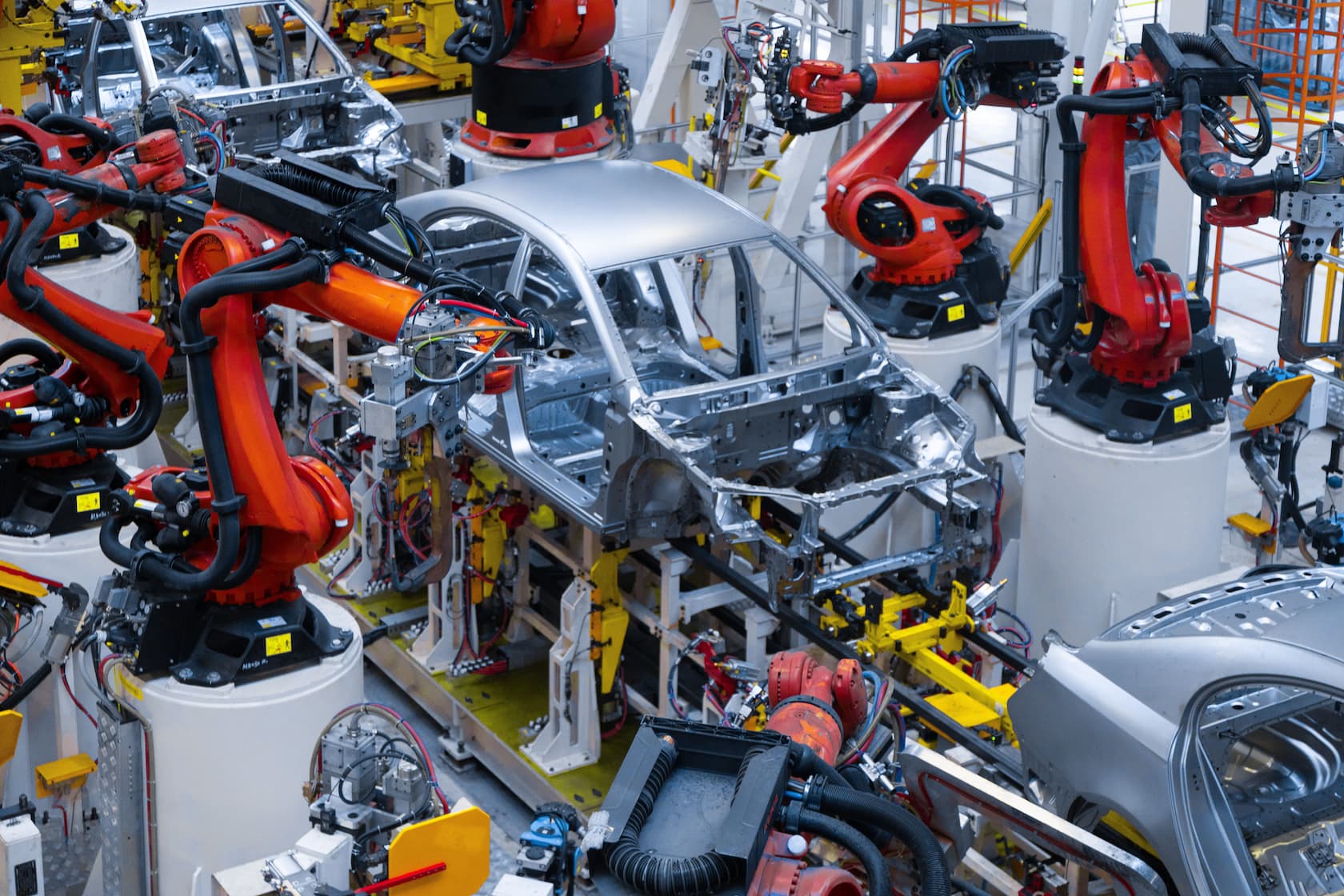

We worked with a major automotive manufacturing company to optimize the spot weld count on any given vehicle BIW, thus decreasing the cost of the vehicle without compromising the functional attributes pertaining to NVH, durability, and safety
Problem/ Objective
To gain a competitive edge in the industry, new vehicles must be developed rapidly as well
as economically.
To reduce the cost of manufacturing by optimizing spot welds meeting all functional
requirements concerning NVH, Durability and Safety.
Solution
Using Machine learning and AI algorithms to reduce the manufacturing cost of vehicle and
faster design cycle time through optimization. It is an accelerated approach to optimize
spot counts on any given vehicle. The solution involves 4 main steps – sampling, descriptive
stats, meta-model and optimization.
- In sampling, we take a predetermined number of observations from a larger population using methods such as Latin Hypercube method
- After sampling, we create an analysis and the descriptive statistics show the correlations of various parameters to the given response variables.
- Then, a Meta-Model is created which formulate reasonably accurate surrogate models for linear and non-linear responses
- Using ML based algorithms, the final optimized model is obtained.
Business Impact
- Considering a vehicle with 4326 welds, 388 welds were reduced. This is ~9% savings in overall spot weld count.
- US $13.5 million savings in manufacturing costs i.e. US $39 per car was saved.
- Intuceo-Ex (ML based optimization) accelerates the optimization and reduces manpower costs by up to ~50%.